How to Manage OpenClaw AI Agents: A Complete Guide

Key Takeaways
Effective oversight of autonomous AI systems requires structured management and strategic configuration to ensure reliability. These five core principles help maintain stable, productive AI operations:
- Centralize agent management through a single administrative console.
- Enforce strict role-based access for all team members.
- Establish clear system prompts to guide agent decision-making processes.
- Monitor operational metrics to detect performance deviations early.
- Automate routine handoffs to ensure continuous workflow execution.
Getting started with OpenClaw administration
Establishing a strong foundation for your AI fleet requires moving beyond basic scripts toward a structured governance model. When you start to manage OpenClaw AI agents, you need a centralized environment that abstracts away underlying server complexities and provides a unified view of your operations. Proper administration prevents drift and ensures that security policies remain consistent across all deployed instances.
Navigating the central management dashboard
Administrative efficiency relies on visibility provided by a unified console. Using tools like TEAM CONTROL allows you to oversee your entire agent infrastructure, from terminal access to memory usage, without managing individual virtual machines. This streamlined approach allows operators to focus less on infrastructure overhead and more on scaling their automated capabilities.
Defining access controls and user permissions
Security begins with strict identity management and scoped access. You should restrict agent modification rights to designated personnel to prevent unauthorized changes to core directives or persistent memory settings. By applying the principle of least privilege, you secure your operational environment against unintended interactions or configuration adjustments that could destabilize your workflow.
Best practices for onboarding new AI agents
Consistent onboarding ensures your agents operate with standard configurations and secure credentials from the start. A structured initialization process should involve defining identity, setting up required bindings, and establishing the necessary routing endpoints for your preferred messaging platforms. Implementing OpenClaw with a standardized setup procedure reduces technical inconsistencies across your deployment.
Setting global environment variables for your fleet
Global variables establish the baseline environment for every agent in your organization. By defining shared configurations like API service endpoints, logging verbosity, and default execution timeouts at the fleet level, you guarantee consistent behavior across components and reduce the need for manual per-agent tuning. These fleet-wide settings act as the configuration backbone for your entire automated architecture.
Configuring agent behavior and directives
Effective orchestration depends on pre-defining the logic that governs how your agents interact with internal and external systems. By specifying constraints and core instructions, you create a bounded environment where agents can perform tasks reliably without exceeding their intended operational scope.
Crafting system prompts and core instructions
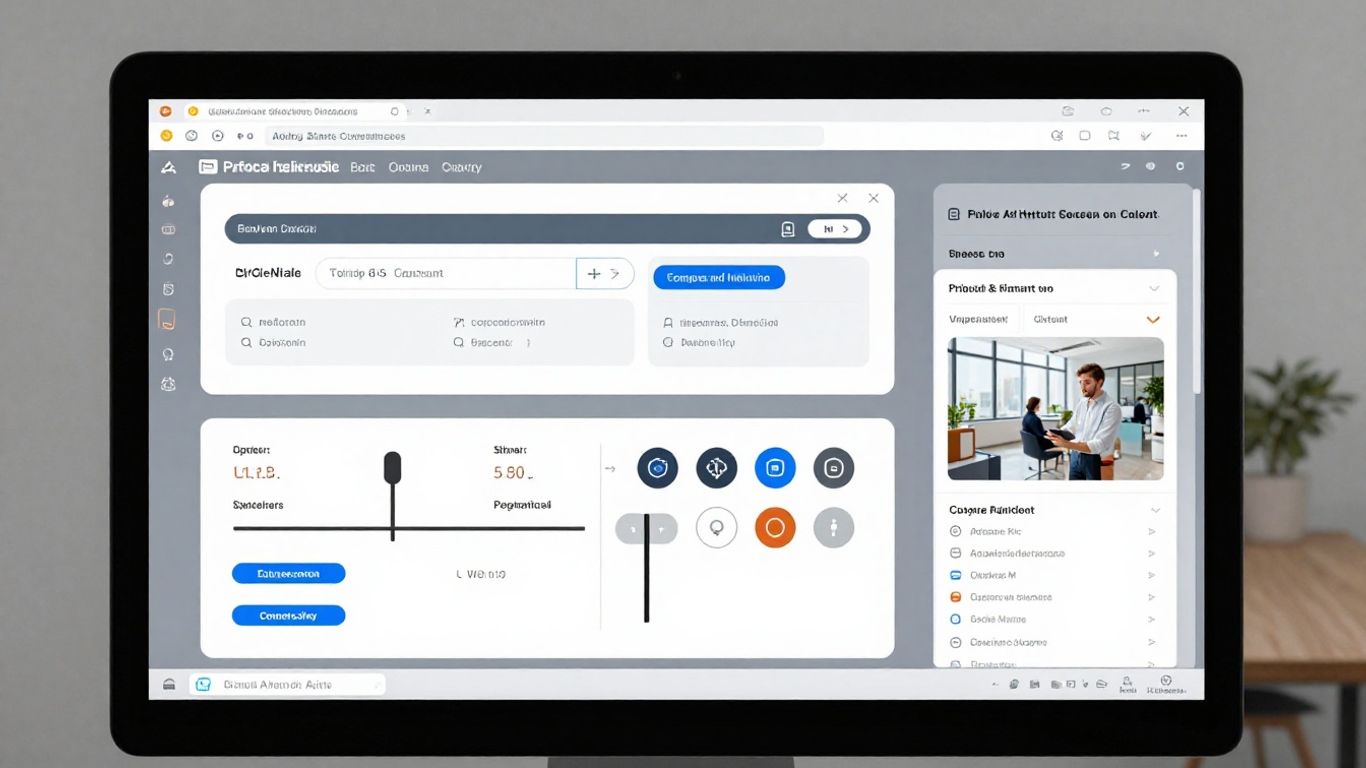
System prompts serve as the mission-critical guidance that defines the persona and operational boundaries of your agents. For these instructions to be effective, they must be direct, avoiding ambiguous language that could lead to non-deterministic behavior during complex tasks. You should periodically review these instructions against current project requirements to ensure the agent remains aligned with evolving organizational goals.
Defining task parameters and execution constraints
Task parameters act as the guardrails for your automation, ensuring that agents stay within predefined operational limits. When defining these parameters, you should document the expected inputs, acceptable outputs, and maximum retries for specific process types. This structure creates a predictable workflow, enabling your TEAM CONTROL platform to better handle execution flow and resource allocation for complex multi-step processes.
Establishing tone and personality guidelines
Maintaining a professional tone is essential for agents that interact with clients or external stakeholders. You should outline specific vocabulary constraints and response formatting rules within the personality guidance section of your management settings. This consistency ensures that every interaction reflects your company's standard of communication, regardless of which agent handles the request.
Managing agent feedback loops and learning settings
Feedback loops are vital for iterating on agent performance based on real-world outcomes. You can implement processes where the agent logs outcome success or failure, allowing managers to adjust core instructions based on empirical evidence. This iterative cycle of refinement relies on accurate data logging to guide future improvements in agent responsiveness and accuracy.
Monitoring agent performance and analytics
Active monitoring provides the necessary insights to ensure your automated workforce remains effective and cost-efficient. By analyzing execution data, you can move from reactive troubleshooting to proactive management of your deployment.
Identifying key performance indicators (KPIs) for automation
Establishing benchmarks allows you to quantify the success of your automated workflows. For operations teams, common metrics include task completion times, error rates in communication channels, and the total token consumption per business process. Monitoring these indicators ensures that your automation platform continues to deliver the expected value at a sustainable cost.
Leveraging real-time activity logs for auditing
Real-time logs act as a crucial source of truth for both performance tracking and security auditing. Because OpenClaw provides detailed streams of agent events, your administrators can troubleshoot issues instantly by reviewing the exact sequence of actions taken by a specific agent. This granular level of oversight is essential for identifying the root cause of communication bottlenecks or task failures.
Detecting and mitigating agent performance drift
Performance drift occurs when an agent's output quality or process speed degrades due to changing environmental inputs or data shifts. You should implement routine audits to verify that current agent performance aligns with historical baselines. To help you structure this, the following status assessment criteria are commonly used in operational management.
| Assessment Metric | Normal Target | Alert Threshold | Action Required |
|---|---|---|---|
| Task Latency | < 500ms | > 2000ms | Review Workflows |
| Completion Rate | 98%+ | < 90% | Audit Directive |
| Resource Usage | Optimal | Over-provisioned | Scale Down |
Regular audits of these metrics will help you maintain operational excellence across your fleet.
Generating monthly operational reports
Monthly reports consolidate raw performance data into actionable business intelligence for stakeholder review. These documents should summarize total task volume, average cost savings, and any significant operational changes made during the cycle. By focusing on high-level trends rather than individual event logs, you can communicate the strategic value of your automated initiatives to leadership effectively.
Integrating agents into existing workflows
Successful integration transforms agents from isolated tools into essential components of your professional toolkit. When managed correctly, these agents link to your existing software stack to create fluid, efficient cross-platform automation.

Configuring API keys and secure authentication
Authentication protocols ensure that agents access only the services they require for operation. Use secure vault managers to inject API keys dynamically, ensuring that no credentials are hardcoded within your configuration files. This method keeps your environment secure and makes rotating credentials straightforward when necessary.
Mapping agents to external software tools
Agents become most powerful when they can interact directly with your external software suite. You should map tools to specific agents based on their assigned responsibilities, ensuring that each instance has access only to the necessary databases or project management platforms. This segmentation prevents scope creep and keeps agent logic cleaner.
Automating handoffs between humans and AI
Strategic handoffs represent the intersection of efficiency and accountability in automated systems. You might configure an agent to handle 90% of a task and then flag it for human verification if confidence scores fall below a certain threshold. This collaborative model ensures that your team only reviews high-impact items while AI handles the bulk of repetitive execution.
Ensuring compatibility with existing data silos
Bridging data silos is a major advantage of modern automating workflows. You should verify that your agent framework can read and write to your legacy formats, using standardized connectors to normalize data. This compatibility allows your agent fleet to act as a unified layer connecting previously disconnected software environments.
Scaling and fleet management
As operations expand, the ability to manage multiple agents becomes a challenge of architecture and resource governance. Fleet management focuses on maintaining consistency while scaling infrastructure to meet variable demand.
Organizing agents into logical groups or departments
Group agents by function to simplify management and monitoring at scale. By assigning agents to specific departments—such as customer support, technical research, or sales automation—you can implement department-wide policies that reflect the unique operational needs of those distinct business units.
Balancing compute resources across the agent fleet
Resource balancing is critical for maintaining performance during peak demand periods. Use management platforms that support dynamic scaling to ensure that individual agents receive the necessary compute power based on real-time task priority. This keeps your costs predictable while preventing service delays when traffic spikes occur.
Managing version history and model rollbacks
Version control provides a safety net during configuration or directive updates. You should maintain a clear repository of your agent configurations and model versions, allowing for immediate rollbacks if a recent deployment results in unintended behaviors. Treating your agent logic like standard source code keeps your operations resilient against change-driven bugs.
Scaling infrastructure for high-demand periods
High-demand periods require proactive infrastructure planning. You should evaluate your baseline versus seasonal surge requirements to determine the optimal scaling strategy for your agent fleet. Relying on managed platforms simplifies this by handling the provisioning of additional compute nodes automatically based on demand signatures.
Troubleshooting and maintenance
Maintenance is not merely about fixing failures; it is about keeping your digital workforce aligned with your business standards. Regularly auditing your environment prevents technical debt from accumulating within your automated pipelines.
Diagnosing common communication bottlenecks
Bottlenecks often emerge when agents interact with high-latency legacy systems or inefficiently structured web services. When diagnosing, focus on tracing the full request lifecycle to identify where delays originate. Resolving these issues often involves re-routing specific tasks or adjusting the timeout parameters within your agent’s core logic.
Establishing protocols for task failures
Every robust system must anticipate failure and define a graceful recovery process. Protocols for task failures should include detailed error logging, an automated notification system that alerts human operators to critical issues, and a predefined retry logic that prevents loops from consuming resources.
Conducting periodic security and privacy audits
Privacy remains a top priority when deploying agents into sensitive corporate environments. Periodically audit the data flows handled by your agents to ensure compliance with existing internal and external security policies. This check should include verifying that no PII is inadvertently exposed in memory shards or logs.
Managing agent retirement and data archiving
Retiring agents requires as much discipline as deploying them. You should have a process in place to clean up unused assets, archive relevant memory and task data according to your corporate retention policy, and officially decommission associated API credentials. This prevents the bloat of stale artifacts and maintains a clean operational workspace.
Proactive maintenance and clear, documented decommissioning protocols ensure that your agent ecosystem remains secure, agile, and effective even as your business requirements change and evolve over time.
Conclusion
Successfully deploying and monitoring AI agents requires a balance of technical oversight and strategic directive management. By focusing on structured governance, real-time analytics, and secure integration, your business can leverage the full potential of TEAM CONTROL and its associated platform to drive long-term operational efficiency.
Frequently Asked Questions
How often should system prompts for agents be reviewed?
You should review your agent system prompts at least quarterly or whenever there is a significant shift in your operational procedures to ensure they remain relevant to current business priorities.
Can AI agents be managed by multiple users simultaneously?
Yes, platforms designed for enterprise use allow for collaborative management, though it is best practice to assign specific permissions to prevent configuration conflicts.
What is the most common cause of agent performance drift?
Performance drift is typically caused by changing input data formats or evolving external tool APIs that require corresponding adjustments to the agent’s internal logic and system instructions.
How can I ensure agent actions comply with privacy standards?
To ensure compliance, use comprehensive logging for all agent actions and perform regular audits to verify that agents are only accessing data permitted by your internal access policies.
Are there specific ways to track spending on AI agent operations?
Most managed platforms include built-in tracking tools that provide visibility into token consumption and compute resource costs, allowing you to monitor spend consistently across your entire fleet.
What happens if an agent experiences a critical task failure?
Well-structured systems should utilize automated notification protocols that alert human administrators immediately, providing them with the necessary error logs to diagnose and resolve the failure.
Is it possible to revert an agent to a previous version of its personality?
If you maintain version control for your agent configurations, you can easily execute a rollback to a stable previous version, ensuring your operations remain consistent even after unsuccessful updates.