What Is OpenClaw? The Complete Guide to the AI Agent Runtime

Key Takeaways
OpenClaw functions as an open-source runtime specialized for autonomous AI agents, facilitating task execution through language models and messaging platforms. The following points summarize the platform's role in modern digital workflows:
- OpenClaw enables agents to perform tasks like inbox management and calendar scheduling.
- The architecture centers on an event-driven runtime that interfaces with popular chat applications.
- Users deploy these agents to automate multi-model workflows without constant manual oversight.
- Security requires strict access controls and memory isolation to prevent unauthorized agent behavior.
- Platforms move beyond local complexity by providing managed infrastructure for seamless deployment.
Understanding the basics of OpenClaw
An AI agent runtime acts as the structural foundation for autonomous software that interacts with users and external services. Developers use this layer to bridge the gap between abstract language model outputs and concrete system actions. By standardizing how these agents intake data and trigger responses, the framework ensures consistency across diverse messaging interfaces. Understanding what is openclaw reveals its design goal to make AI actionable in everyday applications.
Definition of the AI agent runtime
The runtime environment functions as the engine where AI agents process instructions, maintain state, and interact with external APIs. It serves as the primary host for the logic governing agent decisions, tracking progress on long-running tasks. This layer handles the translation of natural language queries into executable operations.
Historical context and development goals
Originally developed by Peter Steinberger, the project began under the name Warelay before evolving into its current open-source form. The developers aimed to create a versatile assistant capable of operating within existing communication channels rather than creating new, proprietary interfaces. This philosophy prioritizes accessibility and interoperability across multiple operating systems.
OpenClaw versus traditional automation frameworks
Unlike rigid script-based automation, this runtime leverages intelligent reasoning to adapt to ambiguous human inputs. While traditional systems require explicitly defined decision trees, this framework allows agents to self-correct based on feedback. Organizations often use TEAM CONTROL to simplify these deployments by managing the underlying infrastructure for their autonomous agents.
Core components of the OpenClaw architecture
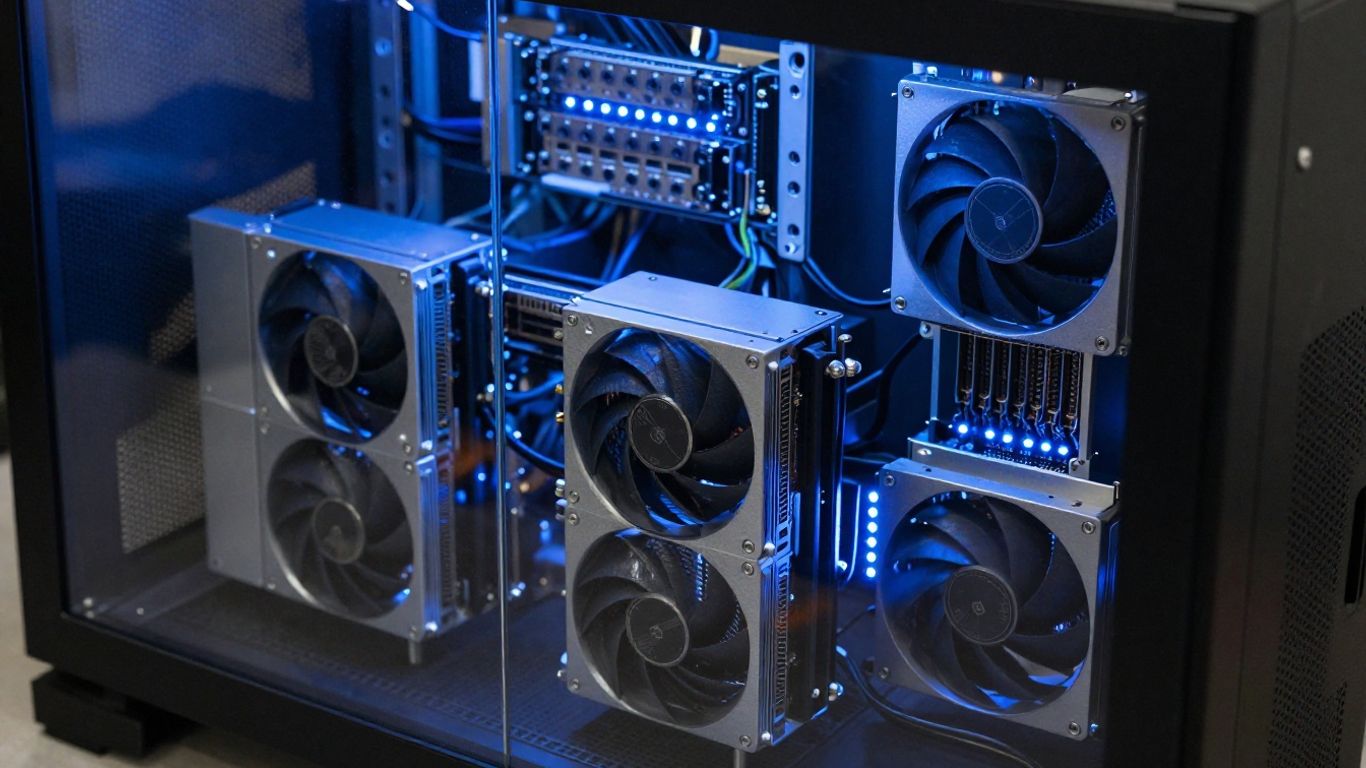
An architectural framework for autonomous agents requires robust modules to function efficiently at scale. These components work together to ingest, process, and act upon information provided by the user in real-time. By segmenting the system into distinct functional zones, developers maintain control over complex agent behavior.
Execution environment for autonomous agents
The execution environment isolates agent processes to ensure that tasks run without interference from other system activities. It provides the necessary compute resources to process multi-model requests concurrently. This isolation is vital for maintaining uptime in resource-heavy environments.
Memory management and context retention
Context retention allows agents to remember previous interactions, ensuring coherent multi-turn conversations. The system stores state information locally, which facilitates rapid retrieval of past data points during task cycles. This localized memory prevents agents from repeating information in active sessions.
Tool integration and library support
Integrating external APIs is simplified through standardized tool definitions that agents use to execute specific commands. The following table illustrates common tool categories used by deployed agents:
| Tool Category | Functionality | Primary Use Case |
|---|---|---|
| Communication | Message processing | Inbox and notification management |
| Scheduling | Calendar updates | Meeting and task coordination |
| Research | Data extraction | Web browsing and analysis |
Connecting these tools effectively transforms the AI agent framework from a simple chatbot into a functional digital assistant.
The role of the runtime engine in task delegation
The engine is responsible for prioritizing tasks based on urgency and resource availability. It evaluates incoming requests and assigns them to the most efficient agent available in the fleet. This delegation ensures high throughput for high-priority workflows.
How OpenClaw powers AI agents
Orchestration is a fundamental aspect of scaling AI operations to meet modern business demands. By managing communication and workflow logic, the runtime allows users to deploy fleets that handle complex multi-step processes. Agents coordinate their actions through shared state pools and event listeners.
Orchestrating multi-model agent workflows
Multi-model agents can utilize different language models depending on the task's complexity, saving power for simpler commands. The runtime handles the switching logic that determines which model is appropriate for a given input. This automated workflow orchestration enhances the internal efficiency of agent operations.
Handling agent-to-agent communication
Agents communicate via events to synchronize actions in multi-agent environments. They request data or hand off partially completed tasks, preventing duplicate efforts. This internal coordination enables agents to act as a unified, cohesive team rather than isolated processors.
Resource allocation and optimization strategies
Optimization strategies ensure that token expenditure and compute power align with business needs. The runtime monitors consumption levels and adjusts resource usage patterns based on load balancing metrics. Effective management prevents unexpected spikes in operational costs.
Error handling and self-correction mechanisms
Agents employ specific diagnostic steps when tasks do not return expected results. Instead of failing immediately, the system attempts to resolve errors by rephrasing queries or retrying connections. The following list details standard self-correction steps:
- Analyzing the initial prompt for potential ambiguity or missing constraints.
- Verifying the status of external API connections before retrying operations.
- Auditing the previous intent to identify logic gaps in execution.
- Requesting user clarification when automated attempts exceed safety thresholds.
Following these steps reduces the need for manual intervention during agent deployment exercises.
Security and safety considerations

Deploying AI agents safely requires meticulous attention to both infrastructure and data protection. Because these agents carry high-level permissions, securing the runtime environment becomes a paramount concern for IT teams. Developers must implement rigorous hardening practices to avoid common exposure risks associated with autonomous software.
Assessing the risks of exposed AI agents
Unmanaged endpoints can lead to significant vulnerabilities, allowing unauthorized actors to exploit agent capabilities. Proper configuration prevents standard threats often identified by modern security audits. Keeping instances isolated from the public internet serves as the first line of defense against intrusion.
Implementing sandboxing and access controls
Sandboxing restricts the agent’s reach, ensuring it only accesses authorized tools and files. Role-based access controls dictate which agents can participate in specific workflows, limiting the risk of lateral movement between departments. Restricting permissions at the gateway level is an essential practice for effective oversight.
Securing sensitive data in memory
Data protection involves sanitizing inputs and encrypting stored context variables to prevent leaks. The runtime ensures that sensitive information is never logged in plaintext outside of protected memory spaces. This approach satisfies compliance requirements while maintaining agent functionality.
Best practices for monitoring runtime activities
Continuous monitoring allows administrators to detect anomalous patterns before they escalate into security incidents. Using centralized platforms from providers like TEAM CONTROL helps in maintaining comprehensive audit logs for all agent actions. Alerting systems should be configured to notify the team of unauthorized access attempts.
Implementing OpenClaw in development workflows
Integrating this framework into internal operations starts with establishing a stable environment. Whether choosing local hosts or managed services, the setup process determines the scalability of your deployment. Proper organization of skills and APIs ensures that your infrastructure supports long-term operational goals.
System requirements and environment setup
The environment setup requires compatible Node.js versions and access to necessary environment variables. Developers should follow official documentation for base installations to avoid dependency conflicts. Establishing these requirements early prevents issues during the later deployment stages.
Configuring the runtime for specific tasks
Task-specific configuration defines how the runtime treats particular commands. Users define agent personas and initial prompts that shape the system's behavior within its environment. Fine-tuning these settings maximizes the accuracy of outcomes and reduces unnecessary API hits.
Integrating third-party APIs and services
Connecting data sources and third-party tools is achieved through plugins and library extensions. Agents perform better when provided with clear manifests defining their operational scope. The management of these integrations should remain modular to allow updates without full rebuilds.
Scaling agent deployments across distributed networks
Scaling involves distributing workloads across multiple servers or containers to ensure high availability. Using optimized infrastructure-as-code modules streamlines the expansion of the agent fleet. This approach ensures consistent performance even when demand fluctuates significantly.
OpenClaw versus other agent frameworks
Evaluating your framework choice requires balancing flexibility against the effort required for system maintenance. While some platforms offer simplified deployment, others provide deeper access to runtime settings for advanced customization. Understanding these trade-offs helps in selecting the right agent framework stack for your business.
Performance benchmarks and latency comparisons
Performance is measured by the agent's response time and its ability to handle concurrent requests without performance degradation. Low latency is critical for messaging-based agents that operate on tight feedback loops. Comparing benchmarks helps distinguish between frameworks built for production and those tailored for experimentation.
Community support and ecosystem availability
The vibrancy of an ecosystem determines how quickly new features reach the main branch. A strong community ensures that documentation remains up-to-date and that bugs are resolved through collective effort. Access to shared skill libraries can also reduce the time needed to develop custom agent logic.
Flexibility versus out-of-the-box readiness
Out-of-the-box solutions prioritize speed to market by providing pre-built integrations for standard enterprise needs. Conversely, high-flexibility frameworks allow for deep customization, often requiring more configuration time. The choice usually hinges on whether the team prioritizes maintenance efficiency or total architectural control.
Compatibility with current LLM ecosystems
Compatibility ensures the runtime can easily switch between various model providers as technology advances. Modern frameworks often support standard adapter protocols to bridge the runtime engine with diverse model interfaces. The platform's success depends on its autonomous AI agent execution stability despite frequent upstream model updates.
Conclusion
Adopting a consistent runtime framework allows organizations to move from experimental AI chatbots to functional, autonomous agent fleets. By focusing on robust communication, clear security, and professional monitoring, users can capture tangible efficiencies while mitigating operational risks. Integrating TEAM CONTROL provides the visibility needed to scale these deployments reliably in a production setting.
Frequently Asked Questions
What is the primary purpose of an AI agent runtime?
The runtime environment handles the logistical tasks of agent operation, including input processing, API communication, and state management, allowing it to function as a bridge between users and LLMs.
Can AI agents be deployed on existing communication platforms?
Yes, many modern agent frameworks are designed to integrate with messaging apps like Slack, Discord, or WhatsApp to facilitate natural user interaction without requiring a custom user interface.
What are the main risks of running autonomous agents?
Key risks include potential context rot, unauthorized tool access, and unmanaged token consumption if the deployment lacks proper sandboxing and resource monitoring.
Why is memory management important for agents?
Effective memory management enables agents to maintain state across long sessions, allowing them to recall previous instructions or data points without starting tasks from scratch.
How do agents coordinate with one another?
Agents use event-based communication to hand off technical tasks, share data, and synchronize operational workflows within a centralized agent fleet.
What should be monitored in a production environment?
Monitoring should cover system latency, token and API costs, error rates, and the frequency of self-correction attempts to ensure reliability and cost efficiency.
How does an agent framework differ from standard automation?
Standard automation follows rigid, predefined scripts, whereas agent-first frameworks utilize intelligent reasoning to handle ambiguous inputs and self-correct during failure modes.